A CLOSER LOOK · SPOILER-LIGHT VIEWING GUIDE
Sherlock Jr.
What happens when a cut changes the world?.
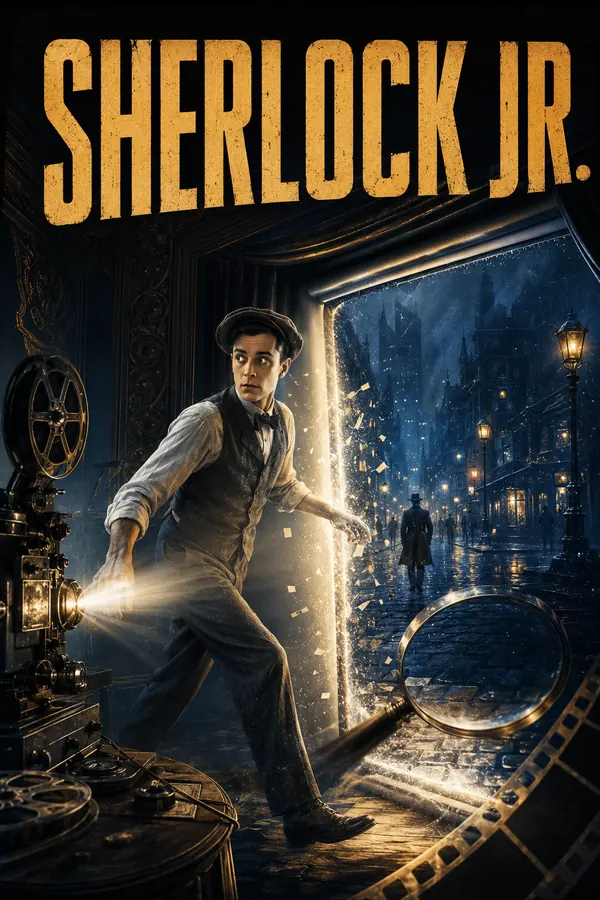
A projectionist’s dream makes a wonderfully direct introduction to film form. You do not need technical vocabulary to enjoy it. Follow the performer, notice when the setting changes, and ask which rules he can control. The film is playful about the gap between wishing you were a hero and knowing how to behave like one.
Find this film & play ↗Opens this title in the existing Melverse catalog.
Before you press play
Sherlock Jr. is a 1924 Buster Keaton comedy. The central character works as a projectionist and imagines himself as a detective. Jeffrey Vance’s essay, published by the Library of Congress, provides background on the film and its effects. Our viewing prompts focus on how those effects feel to someone watching, rather than on claiming a particular technical method for every shot.
Use the body as your reference point
A setting can change so abruptly that the performer seems to belong to one image and then another. Keep your eyes on posture and position. The joke is often the mismatch between a body continuing an action and a new environment refusing to cooperate. Ask what stays constant across the cut; that stable element makes the surrounding change legible.
Distinguish a clue from a prop
A detective story trains you to look for important objects. A comedy encourages you to expect objects to misbehave. Try watching with both expectations at once. When an item is introduced, consider whether it promises an answer, creates a practical problem, or does both. You may find that solving the mystery is only one of the pleasures the scene offers.
Notice who is teaching whom
The dream and the cinema invite a question about learning from images. Does a character act because he understands a situation, or because he has seen a convincing model of how someone should act? Watch hesitation as carefully as confidence. The difference gives the comic hero a human scale, even when the action around him becomes fantastically improbable.
MAKE YOUR OWN NOTES
Three questions after watching
- Which cut surprises you while remaining easy to follow?
- When does an everyday object suddenly become a threat?
- What does the movie screen seem to promise its viewer?
There is no answer key. Use a specific image, action or exchange to support your own reading.
Make it a double feature
Compare the dream’s shifting environments with the more continuous railway geography of The General.
Next: The General →Background & further reading
Jeffrey Vance’s Library of Congress essay (PDF) ↗
Linked historical references support the film background and may contain spoilers. The questions and viewing approach above are Melverse’s AI-assisted editorial material, not quotations from or endorsements by the linked institution. Read our approach or report a correction.