A CLOSER LOOK · SPOILER-LIGHT VIEWING GUIDE
His Girl Friday
Hear the argument beneath the argument.
Choose His Girl Friday when you want language to behave like action. Its newsroom exchanges can be enjoyed for speed, but listening only for individual jokes misses another game: people are constantly trying to redirect one another. Pay attention to the conversation someone wants to have and the conversation they are actually allowing.
Find this film & play ↗Opens this title in the existing Melverse catalog.
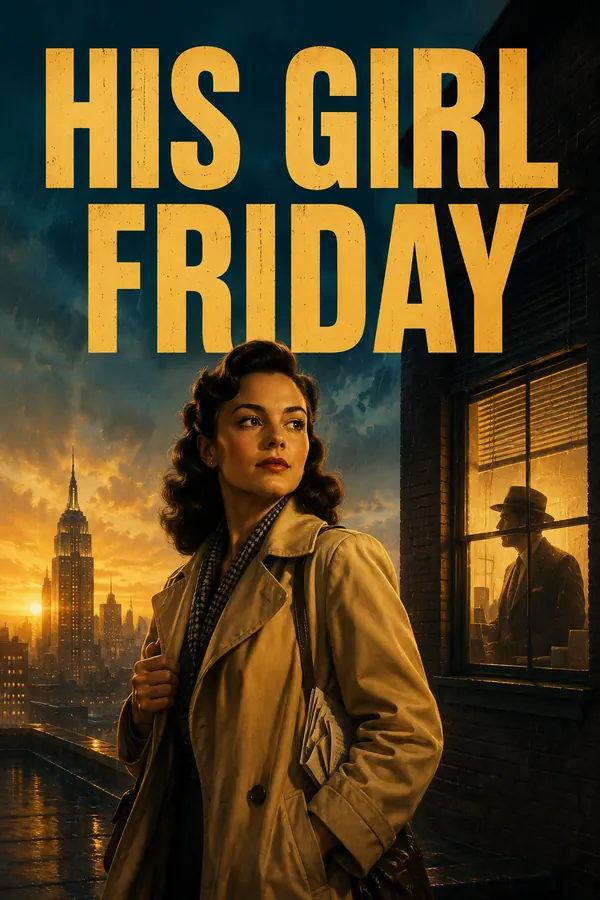
Before you press play
Howard Hawks directed this 1940 comedy, starring Cary Grant and Rosalind Russell. The Library of Congress’s screening-program announcement identifies it as a National Film Registry title and places it in a newspaper-film program. That context is useful because the film’s professional setting matters alongside the romantic conflict.
Follow the objective, not every word
If the pace feels overwhelming, identify what each speaker wants before trying to catch every phrase. Is someone seeking an answer, buying time, preventing an exit, or changing the subject? A rapid exchange becomes easier to follow when you can hear its competing goals. Missing a line need not mean losing the scene.
Watch attention move around the room
A conversation may seem to belong to two people until a telephone, entrance, or interruption redistributes everyone’s attention. Look at the person who is not currently speaking. Their reaction can show whether a tactic is succeeding. The scene’s rhythm is created by listening and movement as well as by the words delivered most loudly.
Keep professional excitement beside its consequences
The pleasure of a fast-moving newsroom can make urgency seem like a virtue in itself. Try asking who benefits from that urgency and who becomes a means to someone else’s story. You can enjoy the comic momentum while noticing its uncomfortable implications. That double attention makes the film more interesting than a simple celebration of clever people talking quickly.
MAKE YOUR OWN NOTES
Three questions after watching
- Which interruption changes who has control of a scene?
- When does a personal conversation become a professional negotiation?
- Does a clever line resolve a problem or merely postpone it?
There is no answer key. Use a specific image, action or exchange to support your own reading.
Make it a double feature
Compare verbal confidence in a crowded newsroom with the uneasy authority of a solitary noir narrator.
Next: Detour →Background & further reading
Library of Congress screening-program notes ↗
Linked historical references support the film background and may contain spoilers. The questions and viewing approach above are Melverse’s AI-assisted editorial material, not quotations from or endorsements by the linked institution. Read our approach or report a correction.