A CLOSER LOOK · SPOILER-LIGHT VIEWING GUIDE
Detour
Listen to the story, question the storyteller.
Detour works well as an introduction to an uncomfortable kind of storytelling: a person explains how everything went wrong, and the explanation itself becomes part of the drama. Rather than trying to solve every uncertainty at once, listen for the moments when a description also sounds like a defense.
Find this film & play ↗Opens this title in the existing Melverse catalog.
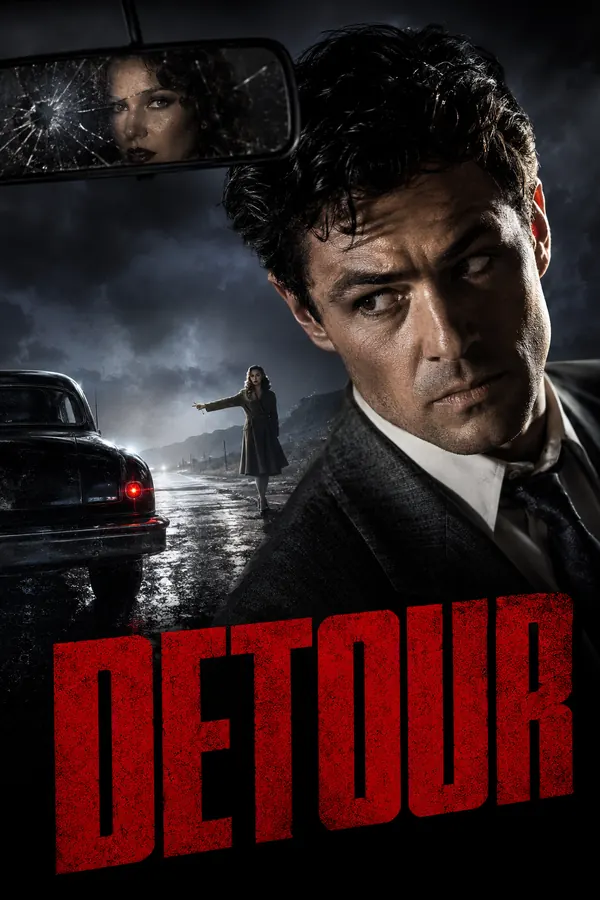
Before you press play
Edgar G. Ulmer directed this 1945 film noir, which follows a troubled journey across the United States. The Library of Congress identifies it as a 1992 National Film Registry selection and links to a longer essay by J. Hoberman. Those sources offer a route into its reputation; the questions below are a practical way to approach the narration without revealing the ending.
Keep two versions of an event in mind
As the narrator explains a decision, distinguish the event he describes from the interpretation he supplies. An action and the reason given for it are not identical. You can follow the plot while leaving room for doubt about the teller’s priorities. That small mental separation turns a compact story into a more active viewing experience.
Watch a journey become a trap
Road stories often promise freedom because the next place seems to offer another chance. Ask whether each change of location actually increases the character’s options. A vehicle or temporary room can feel like a route onward and a confinement at the same time. Notice when your expectation shifts from wondering where the journey leads to wondering whether it permits any escape.
Treat discomfort as information
A hurried explanation, a tense silence, or a harsh exchange can tell you how a character wants a situation understood. Rather than deciding whether every rough edge is a flaw, consider its effect on your trust. Does the scene make an account easier to accept, or make you more aware of someone struggling to control it? Neither question requires you to settle on a single final interpretation.
MAKE YOUR OWN NOTES
Three questions after watching
- Which explanation seems most eager to win your agreement?
- When does a location offer fewer choices than it first appears to?
- How would the same events feel without the narrator’s commentary?
There is no answer key. Use a specific image, action or exchange to support your own reading.
Make it a double feature
Move from a voice trying to explain the past to characters using rapid dialogue to control what happens next.
Next: His Girl Friday →Background & further reading
Library of Congress: Detour and the National Film Registry ↗
Linked historical references support the film background and may contain spoilers. The questions and viewing approach above are Melverse’s AI-assisted editorial material, not quotations from or endorsements by the linked institution. Read our approach or report a correction.