A CLOSER LOOK · SPOILER-LIGHT VIEWING GUIDE
Nosferatu
Let the empty space become frightening.
Nosferatu is a useful choice when you want to explore how a still image can become threatening. Its horror does not require a constant rush of surprises. A doorway, a distant figure, or a stretch of apparently ordinary landscape can make you wait for something you would rather not see arrive.
Find this film & play ↗Opens this title in the existing Melverse catalog.
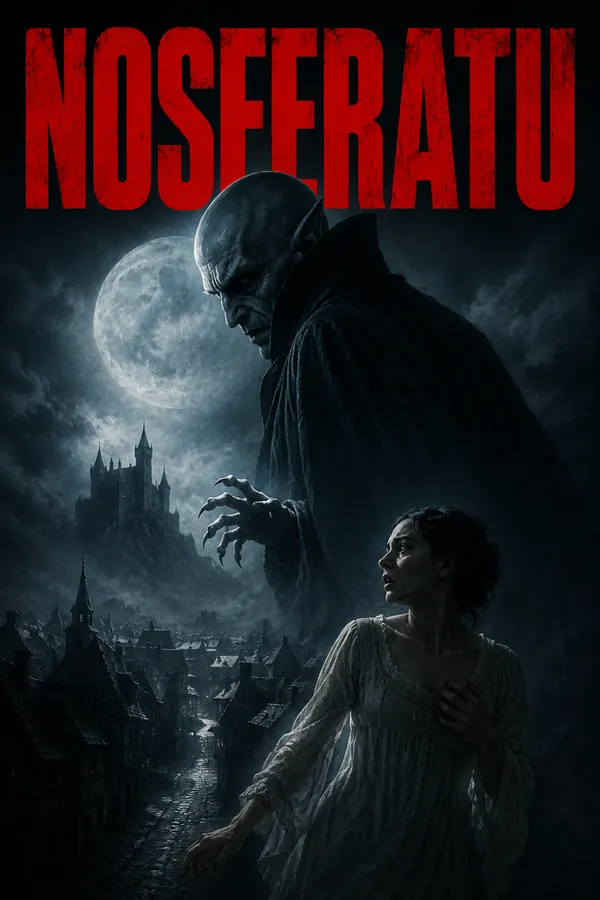
Before you press play
F. W. Murnau directed this 1922 German film, with Max Schreck as Count Orlok. It adapts the Dracula story using altered names and settings. The BFI’s film entry offers background and credits. Silent-film presentations vary in music, tinting, speed and running time, so the edition you encounter is part of the viewing experience.
Look at the space around a figure
Instead of concentrating only on Orlok’s appearance, notice how much of the frame surrounds him. Is he distant or close? Does a door make him seem contained, or emphasize that he can enter? A frame can make a small movement feel consequential by first establishing a large, quiet area. Give those compositions a moment before waiting for the next event.
Follow the idea of arrival
Travel is more than a way to move the plot between locations. Consider what a landscape, a vehicle, or a threshold makes you expect. Ask when a destination begins to feel vulnerable. You can track the threat as a sequence of boundaries crossed rather than as a list of encounters with a monster; this changes how you read apparently transitional images.
Compare a shadow with a body
A shadow offers information without behaving like a complete person. Look for the difference between seeing someone act and seeing a trace of their presence. Which leaves more room for your imagination? The question is useful beyond this film: it reveals how an image can withhold physical detail while making the possibility of contact feel more immediate.
MAKE YOUR OWN NOTES
Three questions after watching
- Which empty place feels dangerous before anyone enters it?
- How does the accompaniment change your reading of a quiet image?
- When is a distant figure more unsettling than a close-up?
There is no answer key. Use a specific image, action or exchange to support your own reading.
Make it a double feature
Compare a threat moving across landscapes with the mounting pressure of people confined inside a farmhouse.
Next: Night of the Living Dead →Background & further reading
Linked historical references support the film background and may contain spoilers. The questions and viewing approach above are Melverse’s AI-assisted editorial material, not quotations from or endorsements by the linked institution. Read our approach or report a correction.